

Favorite
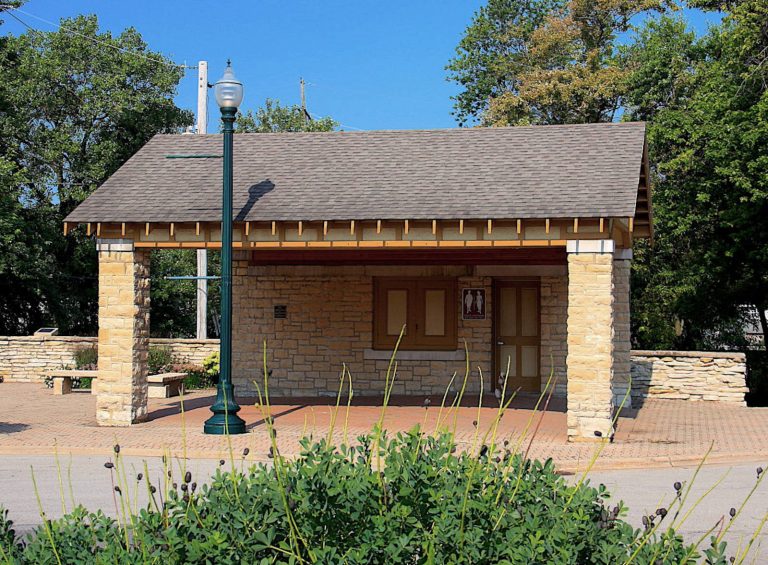
Completed in 1848, concurrent with the adjacent Norton Building, the Scale House weighed loaded grain wagons at the entrance to the granary. After unloading, the empty wagon was weighed to determine the amount of grain delivered. Credit slips were issued cover purchases in Norton’s grocery and dry goods stores. Read more...
Favorite
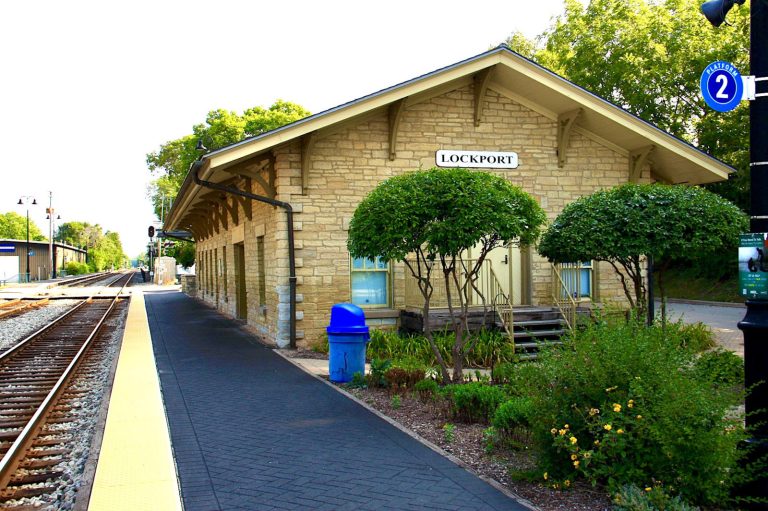
Built in 1860 to serve the Chicago, Alton & St. Louis railway, the Lockport depot provided services for passengers and freight. Due to the speed of the railroad, this dolomitic limestone structure at 13th Street quickly captured the passenger traffic from the I&M Canal packet boats. Listed on the National Register Of Historic Railroad Landmarks, the station now serves Metra Read more...
Favorite
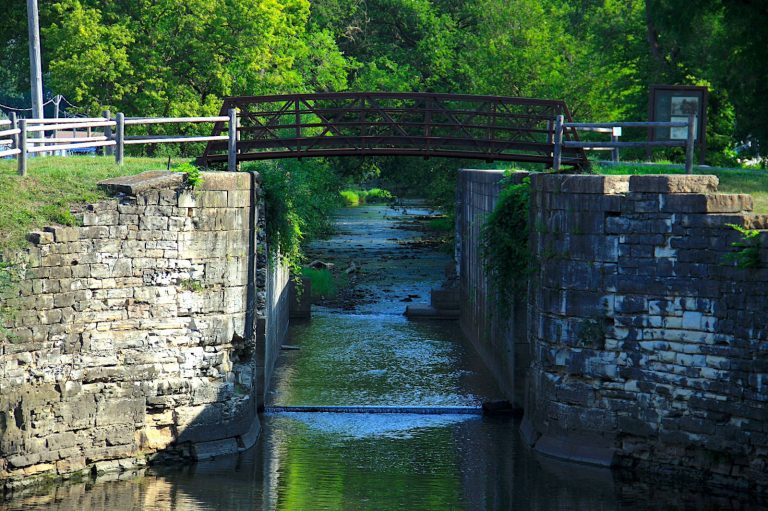
With the I&M Canal construction occurring between 1836 and 1848, Lock No. 1 was a critical piece of the puzzle to connect New York City to New Orleans by an inland water route. Lock No. 1, located at Division & Canal Street, is built with strong local dolomitic limestone and was essentially completed by 1839 to create a water route Read more...

Favorite
Built around 1843, the Stage Coach Stop preserves a piece of Lockport’s early history. The stage coach lines followed the old Indian trail toward Chicago. This route became Archer’s Road and it is still a major route today. Now converted to private residences. Please respect their privacy. Read more...

Favorite
Phone Number: 815-838-5080
Begin your journey into Will County’s past here in the Visitors Center. Learn about the history of each building, moved from sites in Will County to this location at 249 W. 2nd Street. Heritage Village hosts numerous events including Military Days reenactments and the kid’s zone for Old Canal Days. We have renovated the inside of the Visitors Center, and Read more...
Favorite
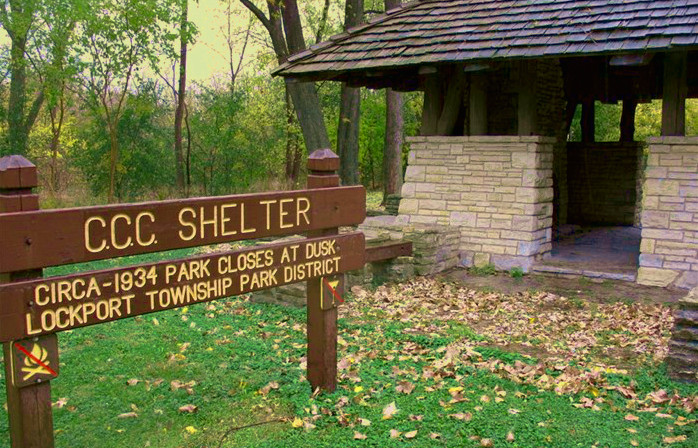
The CCC (Civilian Conservation Corps) was created by the U.S. Govt. during the Depression as a means of gainfully employing young men and giving them military like discipline. They were sent to work on the canal, helping to repair locks, clearing the towpath of growth, and building roads, foot bridges and picnic shelters such as this one. All for the Read more...